
“Get the balance right, and confidence sharpens you. Get it wrong, and it blinds you.”
Hey Rollers,
It was a brutal weekend for South African sport. As a supporter, I’ve been left smarting.
The Proteas fell short in the cricket.
The Springboks stumbled in the rugby. Both to our old foe, the Aussies.
And Dricus du Plessis lost his UFC title defense to an indomitable Chechen.
Three defeats, for three very different reasons.
Each can be mapped onto the Confidence vs. Competence graph I often reference with clients:
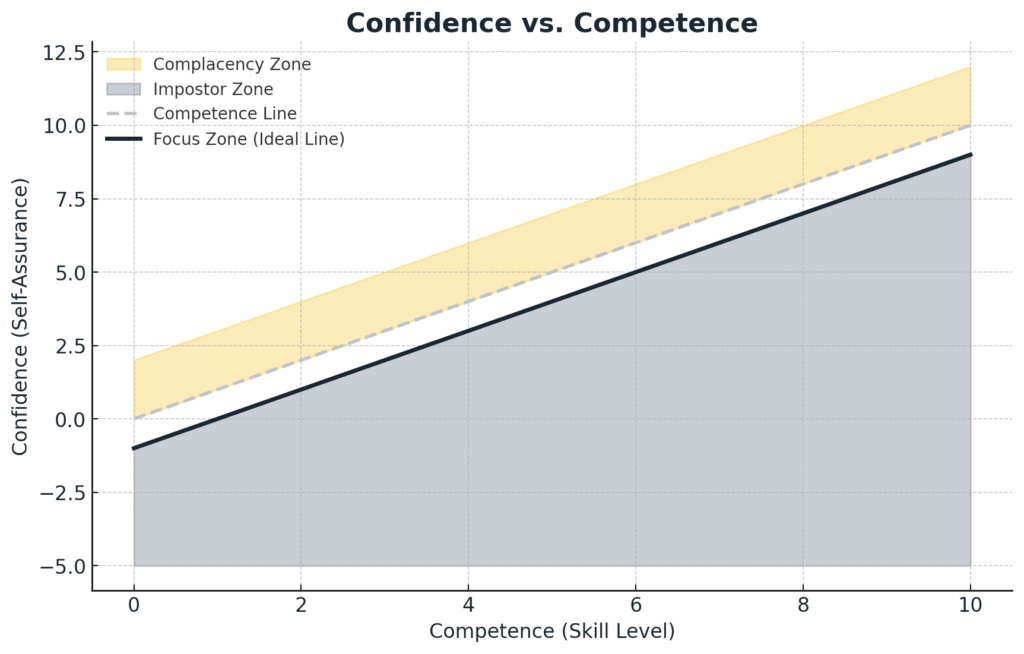
1. Complacency Zone: Confidence Above Competence
Represents overconfidence, where sharpness fades and discipline slips.
2. Imposter Zone: Confidence Well Below Competence
Represents self-doubt, where skills don’t shine because confidence won’t let them.
3. Focus Zone / Line: Confidence Just Below Competence
The confidence we don’t yet have fuels growth without tipping into complacency.
The Boks didn’t lose for lack of skill. They lost because they drifted into complacency. Confidence ran ahead of competence. At 22–0 up after 17 minutes, the game was theirs, but looseness crept in and they threw it away. Final score: 38–22.
The Proteas are the opposite. Their skills are there, but confidence isn’t yet. That gap invites hesitation and self-doubt – the imposter. It’s how wins turn into near-misses.
DDP? He was on the Focus Line in my opinion. Confidence sitting just under competence. He didn’t seem reckless or hesitant. He simply got beaten by a superior grappler. The result was a loss, yes, but no one had ever lasted five rounds on the ground with Chimaev.
In all aspects of life, the balance between confidence and competence tells the story.
-
- Too much confidence → complacency.
-
- Too little confidence → hesitation.
-
- Confidence just below competence → hunger, sharpness, growth.
Winning and losing often come down to the same thing: whether your confidence fuels growth or feeds complacency.
Until next week.
Keep rolling.
Justin 👊
Take Action in 3 Minutes
Pick one area where you’re trying to win right now. Ask someone you trust:
-
- Is my confidence above my competence? (Complacency risk)
-
- Is my confidence too far below my competence? (Hesitation risk)
Then commit to one small action to bring them back into balance.